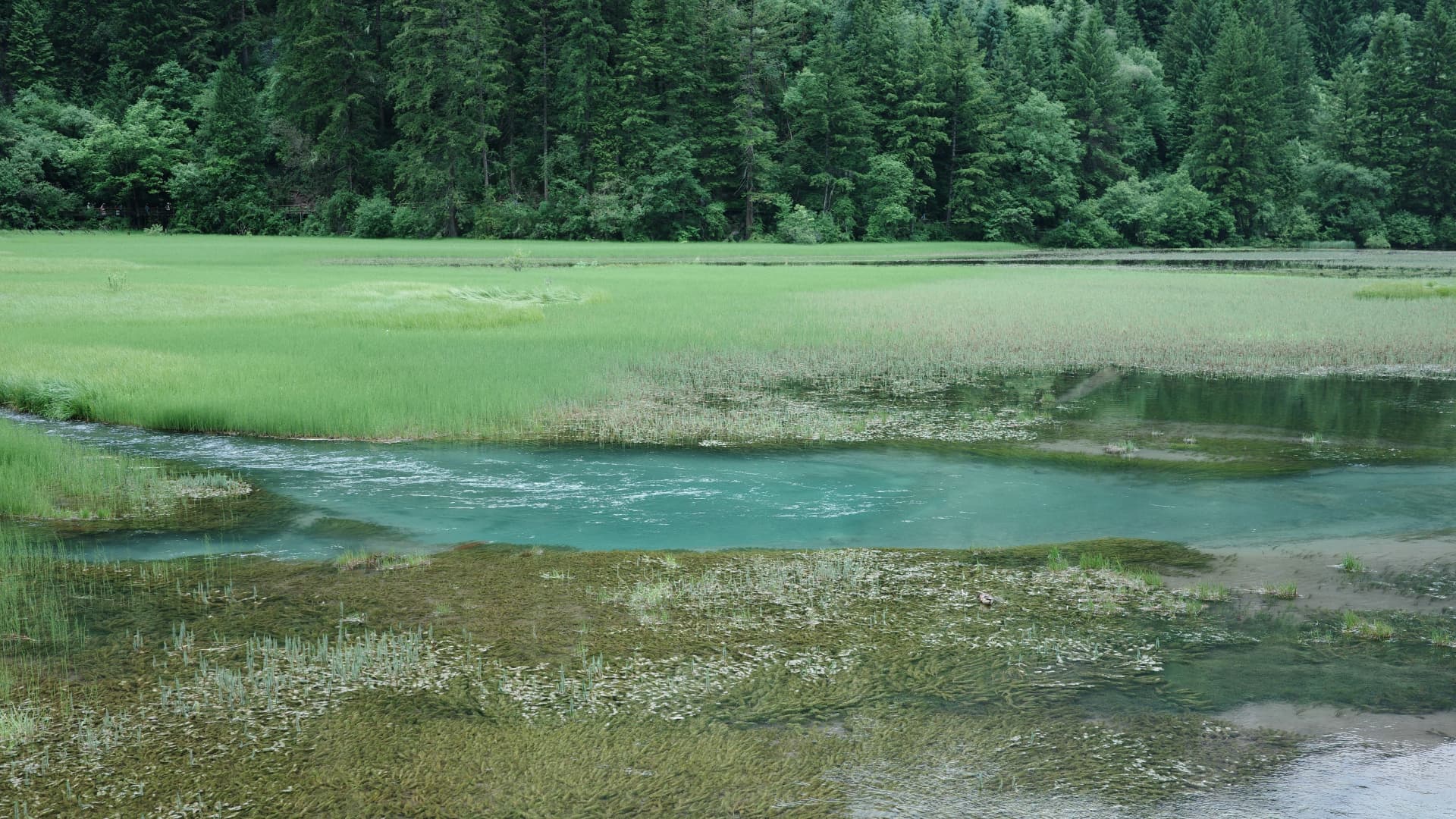
Signature Journey · Western Sichuan · June–October
Slow Days in Western Sichuan
7 Days · Private Small-Group Journey
Western Sichuan doesn't have to be rushed.
This seven-day journey takes the slower road from Chengdu into the mountains, passing Tibetan villages, highland grasslands, alpine lakes, forests and some of Sichuan's most spectacular peaks.
Along the way, spend time learning about the landscape instead of simply driving through it — from barley farming and Tibetan village life to forest ecology, stargazing and photography.
Duration
7 Days / 6 Nights
Trip Style
Scenic Road Trip + Culture + Nature
Group Type
Private Small Group
Best For
Nature Lovers · Photographers · First-Time Western Sichuan Travellers
Season
June – October
Guide
English-Speaking Guide
Photography
Photography leader from China National Geography
Highest Overnight
Approx. 3,700 m at Tagong
The Idea Behind This Journey
Big mountains, without sleeping at extreme altitude.
The route climbs gradually from Chengdu through the valleys and grasslands of Western Sichuan, while deliberately keeping most overnight stays at lower elevations.
It is designed for travellers who want the landscapes of the Tibetan Plateau without the intensity of a high-altitude expedition.
Slow Travel, Done Properly
Why This Journey Is Different
A Gentler Way into Western Sichuan
The journey gains altitude gradually and sleeps lower whenever possible, making it a more comfortable way to experience Western Sichuan's mountain landscapes.
Mount Siguniang Panorama
See all four major summits of Mount Siguniang from Maobiliang, including Yaomei Peak at 6,250 metres.
Tibetan Villages of Danba
Stay among the terraced barley fields, traditional Gyarong houses and centuries-old stone watchtowers of Danba.
Learn the Landscape
Spend time in the forests around Wuxu Lake learning how plateau forests work, identifying trees and plants and pressing botanical specimens. From June to August, this may instead become a mushroom-foraging excursion.
From Barley to Tsampa
In the highland barley fields around Xinduqiao, learn how Tibetan barley is grown, harvested, roasted and turned into tsampa.
Stargazing & Night Photography
Spend an evening near Lotus Lake beneath the plateau night sky, with guidance on constellations and night photography.
Mount Gongga at Sunset
Wait for the last light on Mount Gongga — at 7,556 metres, the highest mountain in Sichuan.
Photography-Led Travel
A photography leader from China National Geography travels with the group alongside the English-speaking guide.
Along the Way
Key Places
- Balang Mountain
- Mount Siguniang
- Danba Tibetan Villages
- Mount Yala
- Tagong Grassland
- Xinduqiao
- Wuxu Lake
- Moon Lake
- Lotus Lake
- Mount Gongga
- Honghaizi
- Kangding
Suggested Itinerary
Seven days, taken slowly
Day 1 — Arrive in Chengdu
Arrive in Chengdu and transfer from Chengdu Tianfu Airport, Shuangliu Airport or Chengdu East Railway Station. The rest of the day is free to relax before heading into the mountains. Overnight in Chengdu.
Day 2 — Chengdu → Balang Mountain → Mount Siguniang → Danba
Leave the Chengdu plain and climb toward Balang Mountain. Stop at Maobiliang for one of the best panoramic views of Mount Siguniang, then continue to Zhonglu Tibetan Village in Danba, surrounded by terraced fields, traditional houses and ancient stone watchtowers. Overnight in Danba at approximately 2,000 metres.
Day 3 — Danba → Mount Yala → Muya Monastery → Tagong
Begin with morning prayers around a local white stupa. Continue toward Mount Yala and spend time experiencing the mountain landscape rather than making a quick photo stop. Visit Nalangma Library for a glimpse into contemporary plateau life, explore Muya Monastery and its vast mani stone city, and finish on Tagong Grassland beneath Mount Yala. Overnight at approximately 3,700 metres — the highest sleeping altitude of the trip.
Day 4 — Xinduqiao → Tibetan Village → Wuxu Lake
Spend the morning in highland barley fields around Xinduqiao, learning how barley becomes tsampa. Stop for tea in a Tibetan home in Duorang Village, then continue toward Wuxu Lake. In the surrounding spruce and fir forest, learn about plateau ecology and identify local plants — from June to August this may become a mushroom-foraging excursion. Overnight in Jiulong at approximately 2,900 metres.
Day 5 — Moon Lake → Lotus Lake → Stargazing
Take an easy walk around Moon Lake and enjoy a lakeside picnic and afternoon tea. Continue to Lotus Lake Village for a locally cooked firewood chicken dinner. After dark, head outside for stargazing and night photography with the photography leader. Overnight near Lotus Lake.
Day 6 — Lotus Lake → Tibetan Villages → Mount Gongga Sunset
Enjoy an easy forest walk around Lotus Lake, then continue through the Xinduqiao area and visit Jiagenba Village. In the evening, travel to Tinong Valley and wait for sunset on Mount Gongga — at 7,556 metres, the highest mountain in Sichuan. Overnight in Xinduqiao.
Day 7 — S434 Snow Mountain Road → Honghaizi → Kangding
Drive along the spectacular S434 snow mountain road. Stop at Honghaizi, an alpine lake with views toward Mount Gongga when the weather is clear, then finish with a walk through Kangding before departure. Transfer to Kangding Airport or continue onward to Chengdu as arranged.
Experiences
More Than a Road Trip
This journey is not about stopping at viewpoints. It is about spending time understanding and experiencing Western Sichuan.
- Tibetan village tea experience
- Highland barley and tsampa experience
- Forest ecology experience
- Seasonal mushroom foraging
- Lakeside picnic
- Stargazing
- Night photography
- Tibetan village life
- Landscape photography
Comfort at Altitude
Designed with Altitude in Mind
Western Sichuan is high-altitude country, but this itinerary is designed to gain elevation gradually and sleep lower whenever possible.
The highest overnight stay is around 3,700 metres at Tagong. Several mountain passes and viewpoints may be higher, but the journey generally descends again for overnight stays.
Travellers should still be prepared for altitude, changing weather and mountain-road conditions.
Before You Go
Good to Know
- This journey operates primarily from June to October.
- Mountain weather can change quickly.
- Clear views of Mount Siguniang, Mount Yala and Mount Gongga are weather-dependent.
- The itinerary may be adjusted depending on road and weather conditions.
- Warm layers are recommended even in summer.
- Some experiences vary by season.
- Mushroom foraging is generally available from June to August.
- This is primarily a scenic road journey with easy walks rather than a trekking-focused tour.
Want to experience Western Sichuan at a slower pace?
Tell Rui your travel dates, group size and what you're most interested in — mountains, photography, culture or nature — and I'll help you plan the right journey.